
 Skip to content
Pre-trip safety workflow
National Park RV Alert Check
Open the official conditions and alerts that can change an RV route, reservation or safe arrival—without pretending a cached page is live.
Check roads, oversized-vehicle rules and Cadillac access
Cadillac Summit Road requires a separate vehicle reservation during the published 2026 season, and RVs, trailers and vehicles over 21 feet are prohibited on that road.
Open official Acadia conditionsOversized vehicle restrictions →Check road, fire, weather and campground conditions
Seasonal roads and campground dates can move with snow, fire and operational conditions. A 2026 park entrance reservation is not required, but a campground reservation still is.
Open official Yosemite conditionsRV restrictions →Check road closures, weather and travel cautions
Mountain roads, low visibility, storm damage and traffic can change the useful route. Check the park’s current conditions before committing a large rig.
Open official Smokies conditionsTraffic and travel tips →The five-minute RV alert routine
- Open the park conditions page on departure morning.
- Search for your campground, entrance road and planned scenic road.
- Check vehicle-length, height, trailer and propane restrictions—not only “road open.”
- Save reservation confirmations and essential notices offline because park connectivity may be unreliable.
- Recheck after severe weather or a long fuel stop before entering a constrained road.
Ticheka has an owner-controlled NPS API connection, but NPS documents that API and park-page alerts may not always match at the same moment. The safest visitor-facing behavior remains a timestamped official link—not a copied or implied all-clear.
The five alert types that change an RV trip
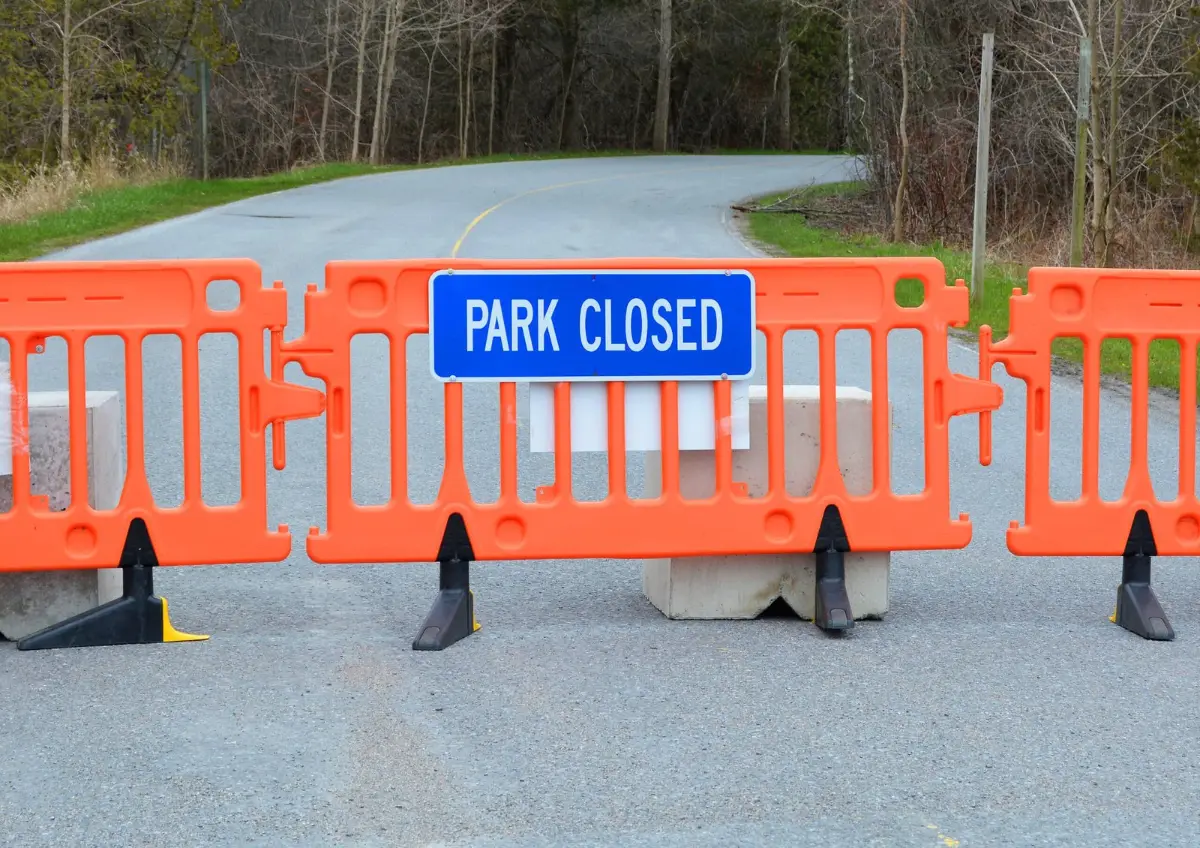
Park alert feeds are written for every visitor, so most of what you scroll past is irrelevant to a rig. Filtering matters more than reading. These are the categories that can change your route, your reservation or your ability to arrive at all — everything else is context.
- Dimensional restrictions. Length, height, width and combined-length limits on specific roads. These are the most common cause of a mid-trip reroute, and they are frequently published on a road page rather than in the headline alerts.
- Tunnel and propane rules. Some park tunnels require propane to be shut off, or escort, or exclude oversized vehicles at certain hours. This is a rule you must know before the approach, because there is rarely anywhere to turn around.
- Seasonal road status. High-elevation roads open and close with conditions; published dates are estimates. An opening date published in advance is a forecast, and it moves.
- Campground operational changes. Loop closures, water shut-offs and dump station outages routinely happen without the campground itself closing, and they will not appear on your reservation.
- Entry systems. Timed entry or vehicle reservations are separate from your campsite booking. Holding a campsite does not always grant road access, and the reverse is also true.
How to read a park page like an RV traveler
The instinct is to search for the word “closed”. That is the wrong search, because the notices that strand a rig almost never use it. A road can be entirely open and still be unusable for you.
Search instead for the specific numbers and nouns: length, feet, vehicles over, trailers, towed, oversized, propane, combination. Then check three separate places, because parks rarely put everything in one: the alerts or current conditions page, the individual road page for your route, and the campground page for your booking. A restriction that appears on the road page will not necessarily be repeated in the alert feed.
Read the date on every notice. An undated advisory is usually a standing rule rather than a live condition, and an alert from last season may have been superseded without being removed. If two pages disagree, the more specific page — the individual road or campground — is usually the more current one.
Write down three numbers before you search. Your total combination length, your loaded height including anything on the roof, and your width including mirrors. Almost every restriction you need to find is expressed against one of those three, and you cannot evaluate a notice without them. If you have not measured properly, start with how to measure your RV for campground limits.
When to check, and how often
Checking once, the week before, is the pattern that fails. Conditions that matter to a rig change on a shorter cycle than that, and the most consequential ones change overnight.
- At booking. Confirm the standing dimensional rules for your approach road and your campground. These rarely change, and knowing them early can change which campground you book.
- Two weeks out. Check seasonal road status and any entry-reservation requirement. This is late enough to be meaningful and early enough to change plans without losing money.
- Departure morning. Re-read alerts and campground notices. This is the check that catches water shut-offs and overnight closures.
- Before the final approach. At your last reliable-signal fuel stop, check once more. Then save what matters offline, because coverage inside parks is unreliable and an alert you cannot open is an alert you do not have.
- After any severe weather. Storms, wind events and fire activity all produce closures that are published quickly and reversed slowly.
What to do when a restriction appears
Finding a restriction two days out is a good outcome, not a bad one. Work through it in a fixed order so you do not cancel a trip that was still viable.
- Establish whether it affects the approach or the interior. An interior scenic road you cannot drive changes the itinerary. An approach road you cannot drive changes the trip.
- Look for a legal alternative approach. Most parks have more than one entrance, and dimensional rules differ substantially between them. This is usually the answer.
- Consider unhitching. If the restriction applies to combinations rather than to vehicles, leaving the trailer at the campsite often resolves it entirely.
- Check the campground before you cancel. A restricted scenic road rarely affects your site, and the weekend may still be worth taking.
- Only then change the booking. Note the cancellation deadline and make the decision inside it rather than at the last minute.
If the answer is to move the trip elsewhere, our campground finder filters a reviewed source set by rig fit, and the national parks camping hub compares parks by hookups and season. If the fallback is dispersed camping on nearby forest or BLM ground instead, read the boondocking rules and public-land regulations that govern where you may legally park overnight.
Alert-check questions
Does my campsite reservation guarantee I can get in? Not always. Where a park operates timed entry or a separate vehicle reservation, those are distinct systems. Check whether your camping reservation covers entry, and do it at booking rather than at the gate.
Is “road open” enough? No. A road listed as open may still exclude your vehicle — size and trailer restrictions apply separately. A road can be fully open and still prohibit your combination on length, height or trailer rules.
Why do the app and the park website disagree? Different systems update on different schedules, and neither is instantaneous. Where they conflict, treat the park’s own page for that specific road or campground as authoritative and plan for the more restrictive of the two.
Should I trust a published seasonal opening date? Treat it as a forecast. High-elevation roads open on conditions, and both early and late openings are normal. Never build a route whose only version depends on a seasonal road being open.
What should I save offline? Your reservation confirmation including the equipment allowance, the campground page, any dimensional restriction that applies to your route, and the park’s phone number. Assume no signal from the entrance onward.
Official sources checked
- NPS alert endpoint documentation
- NPS API authentication and limitations
- NPS API frequently asked questions
Dates, fees, site fit, closures and reservation rules can change after publication. The linked authority remains the final source.