
 Skip to content
Decision tool · Reviewed source set
National Park RV Campground Finder
Filter a human-reviewed source set by park, service level and rig size—then verify the exact campsite on the official booking page.
What this tool is: a focused, transparent source set covering three high-intent parks. It is not a complete inventory or a live availability feed. “Site-specific” means the campground contains different pad lengths; your exact equipment must fit the campsite record you reserve.
Blackwoods
Closest of the three mainland campgrounds to Bar Harbor and the east side of Mount Desert Island. No hookups; seasonal dump station and potable water. NPS says the 35-foot maximum is strictly enforced.
Verify Blackwoods on NPS →Seawall
West side of Mount Desert Island near Southwest Harbor. No hookups; reservations are online only. Choose the exact equipment type and length in Recreation.gov instead of relying on a campground-wide number.
Verify Seawall on NPS →Schoodic Woods
Mainland Schoodic Peninsula option. NPS lists small-RV 20-amp, electric-only, and electric-plus-water site types. The drive to Bar Harbor is roughly 1 hour 15 minutes, so select it for Schoodic—not as a shortcut to Mount Desert Island.
Verify Schoodic Woods on NPS →Upper Pines
All-year Yosemite Valley campground. No campsite hookups. The park lists an all-year dump station at Upper Pines, but every reservation still has its own equipment limits.
Verify Yosemite campground table →Lower Pines
Seasonal Yosemite Valley campground with some of the park’s largest published equipment limits. Only a small number of sites fit the maximum sizes; filter the actual reservation inventory by equipment length.
Verify Pines campgrounds →North Pines
Seasonal Yosemite Valley campground. In 2026, NPS lists an early-access lottery plus remaining inventory released later. No hookups; site geometry can be more restrictive than the campground maximum.
Verify North Pines →Cades Cove
Year-round frontcountry campground near the 11-mile Cades Cove loop. Recreation.gov records include RV sites around 30 feet, but the exact campsite pad, clearance and generator rule control.
Check Cades Cove inventory →Elkmont
Large seasonal campground near Little River. Recreation.gov shows a wide range of site limits—from compact sites to 35-foot RV options. No general hookups or showers; verify slope, pad and generator loop.
Check Elkmont inventory →Smokemont
Year-round frontcountry option on the North Carolina side. Individual records can distinguish RV and trailer limits; do not use the driveway length as an automatic equipment allowance.
Check Smokemont inventory →Ticheka has an owner-controlled RIDB connection for reviewed research and ongoing source checks. Live campsite availability is deliberately not shown here because availability changes quickly and still must be verified on the exact Recreation.gov record.
How to filter without excluding the site you wanted
The three filters are deliberately blunt, and used in the wrong order they will hide options you could actually have taken. Work through them in this sequence.
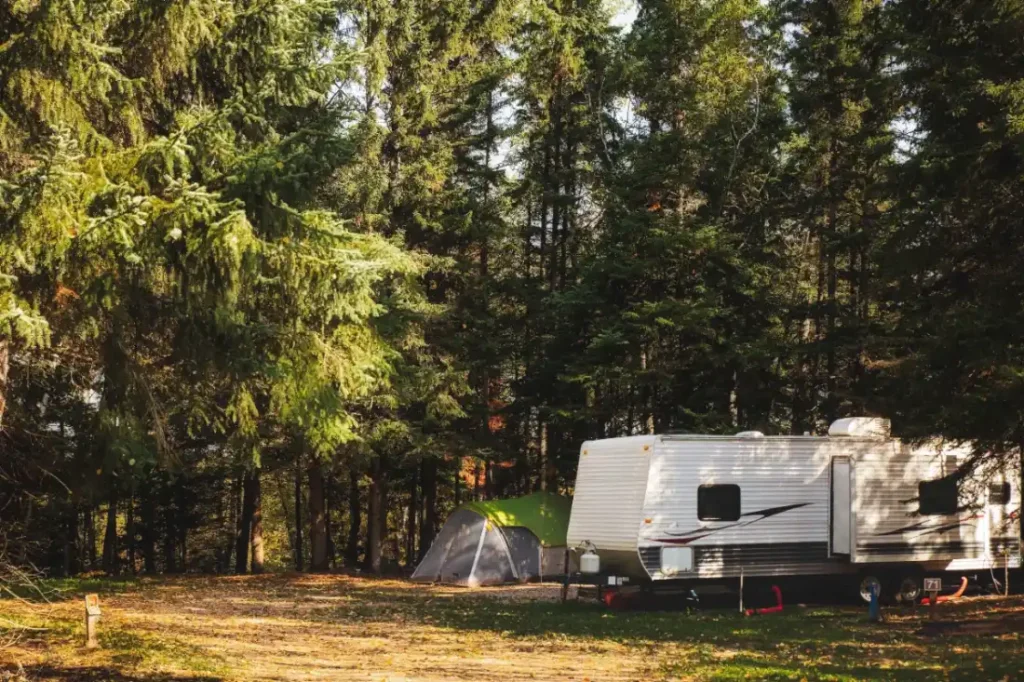
- Park first. Start with the destination, not the amenity. Service level varies far more between campgrounds inside one park than it does between parks, so filtering on hookups before you have chosen a park throws away the wrong things.
- Rig size second. Filter on your true measured combination length, not the number on the registration document. If the results collapse to nothing, that is useful information: it means the park is marginal for your rig and you should be looking at gateway options outside the boundary. Dispersed sites on the surrounding national forest or BLM land can also absorb a longer rig, provided you check the boondocking rules and public-land regulations for that district first.
- Service level last, and reluctantly. Most national park campgrounds are dry. Filtering for hookups first will empty the list at almost every park in the set and give you a misleading impression that there is nothing available.
What the service levels mean
These labels are used inconsistently across the industry, so it is worth being precise about what each one gets you in a national park context.
| Level | What you get | What to plan for |
|---|---|---|
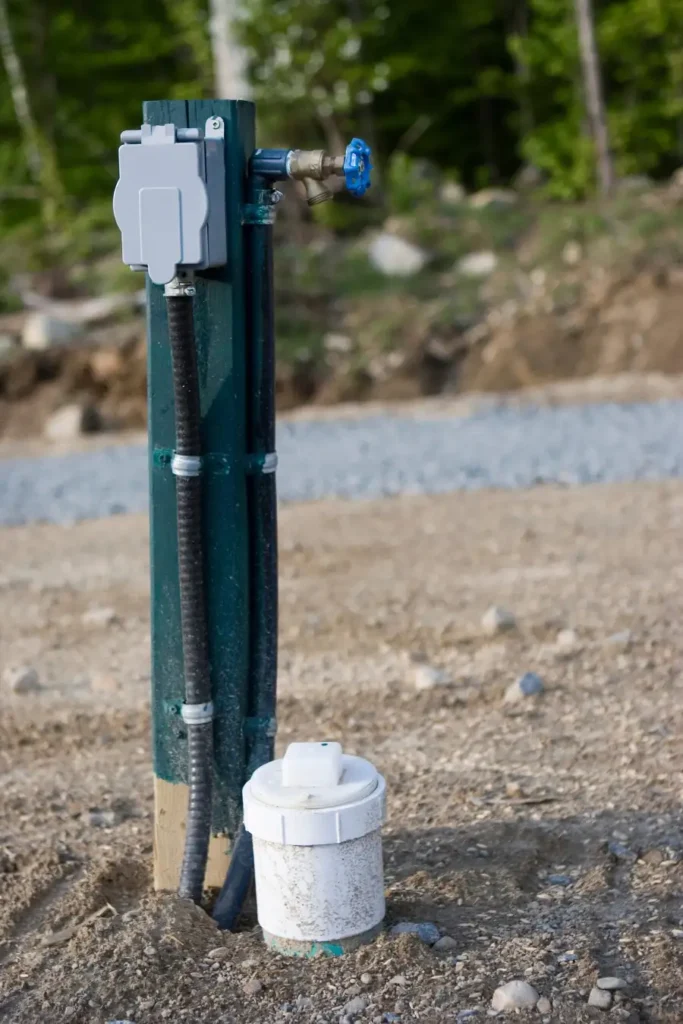
| Dry / no hookups | A pad and usually a table and fire ring. Nothing connected. | Arrive with full fresh water and empty holding tanks. Power from battery, solar or generator inside posted hours. |
| Electric only | A pedestal, commonly 20 or 30 amp. No water or sewer at the site. | Check the amperage before assuming air conditioning will run. Still carry water aboard. |
| Electric and water | Power and a potable tap at the site. No sewer. | You can stay longer, but gray and black capacity still sets your limit. |
| Full hookups | Power, water and sewer at the pad. | Rare inside park boundaries. Where it exists, it books first and fastest. |
Amperage is the detail that catches people. A 20-amp pedestal will not run a rooftop air conditioner — plan the evening differently than on 50-amp service. If your weekend depends on power, confirm the amperage on the official campground page rather than on the word “electric”. The trade-offs, and when a battery and solar answer beats chasing hookups, are covered in our RV solar setup guide.
Why a matching length is not a guaranteed fit
Every length figure in this source set is a campground-level published maximum. It describes the best site in the loop, not the typical one, and in several parks only a handful of sites reach that number. Treating the published maximum as a description of the average site is the most common way an otherwise careful booking fails at the entrance.
There are three further gaps between a published number and a usable site. The figure usually refers to equipment only, so a tow vehicle parked in front of the trailer may not be counted. Pad shape matters as much as pad length, and a back-in on a curve can defeat a rig that fits on paper. And overhanging trees on the loop road constrain height in ways that never appear in a length table.
Use the finder to shortlist, then verify one site. This tool exists to reduce a park to two or three credible candidates. The booking decision should always be made on the official campground page for the specific site number, with the equipment allowance visible. Screenshot it — that screenshot is what settles a dispute at check-in. If the shortlist is for a two- or three-night escape rather than a long tour, planning a weekend RV trip covers how to keep the driving radius and the booking window realistic.
What this source set covers, and what it does not
Transparency about scope is more useful than a false claim of completeness. This is a focused, human-reviewed set covering a small number of high-intent parks, not a national database.
- Every entry is checked by hand against the official record. Each record was read against the responsible park’s own published pages, and each links back to that source so you can check it yourself.
- It is a snapshot. Campground dates, fees, loop closures and equipment allowances change, sometimes mid-season. The date of review is shown; the official page is always more current.
- It excludes private and gateway campgrounds. Those are often the right answer for a large rig, but they are not covered here.
- It does not show live availability. Nothing on this page knows whether a site is free tonight. Availability lives with the official booking provider.
If a record and the official page disagree, the official page wins, and we would like to know: our corrections policy explains how we handle that, and data sources and methodology sets out how records are built and checked.
After you have a shortlist
Shortlisting is the easy half. Three things decide whether the booking succeeds.
- Know your release date. Reservation windows differ by park and sometimes by campground within a park. When national park campsites open for booking sets out the pattern.
- Know your real dimensions. Length, height and width, measured rather than remembered — see how to measure your RV.
- Check current restrictions on the approach. A campground you can book is not always a campground you can reach this week. Run the park alert check before you commit.
Campground finder questions
Does this show live availability? No. It is a reviewed reference set for narrowing choices. Availability and booking live with the official provider linked on each record.
Why are so few campgrounds listed? Because each record is read and verified by a person against the park’s own pages. We would rather cover a small number of parks accurately than a large number approximately.
My rig matches the published maximum. Am I safe to book? Not yet. That maximum usually describes only a few specific sites. Verify the individual site number on the official page and keep the screenshot.
What if no result matches my rig? That is useful information, not a gap in the data. Look at gateway campgrounds outside the park boundary, which commonly accept longer combinations and more often have full hookups.
How often is the set reviewed? Each record carries its own review date. Treat anything approaching a new season as due for re-verification against the official page.
Official sources checked
- NPS API and campground data documentation
- Acadia campground and reservation guidance
- Yosemite campground table
- Great Smoky Mountains frontcountry camping rules
Dates, fees, site fit, closures and reservation rules can change after publication. The linked authority remains the final source.