
 Skip to content
Editorial note: This guide is desk research based on official Recreation.gov records, National Park Service pages, and the park’s authorized concessioner pages, each checked on August 2, 2026. Dates, fees, and services change; confirm the linked official record before you book or travel. See our editorial policy and data sources and methodology.
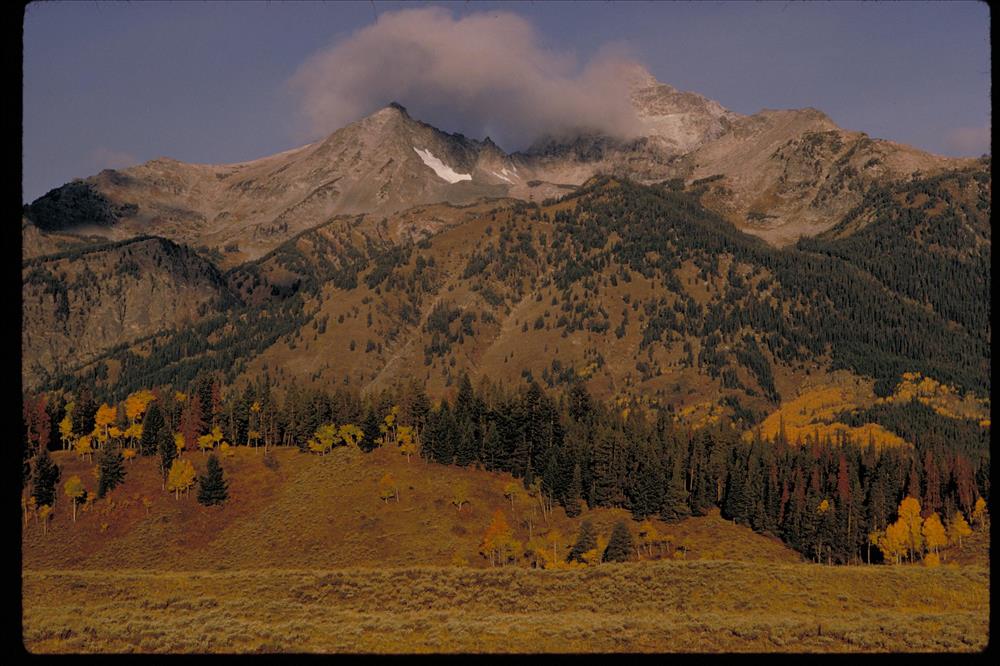
Featured photo: The Teton Range in autumn, Grand Teton National Park. Photo: NPS staff. Public domain via NPGallery. Scenic location context—not a campground or current-conditions record.
Quick answer
Grand Teton’s developed campgrounds are reservation-only and bookable on Recreation.gov on a six-month rolling basis, subject to each facility’s live rules, per the park’s authorized concessioner. Within Grand Teton National Park proper, Colter Bay RV Park provides full hookups; Headwaters at Flagg Ranch in the John D. Rockefeller, Jr. Memorial Parkway also provides full-hookup pull-through RV sites. Colter Bay Campground and Gros Ventre offer dry-camping options with dump and potable-water facilities, although Gros Ventre dump access is labeled limited. Signal Mountain adds electric-only and dry sites for rigs up to 30 feet, while Lizard Creek’s current Recreation.gov record caps RVs and trailers at 25 feet. Official records generally cap stays at 14 nights per campground, seven nights at Jenny Lake, and 30 days in the park per year. If Yellowstone is part of the trip, treat it as a separate reservation and live road-status check.
Step 1: Pick your base by geography
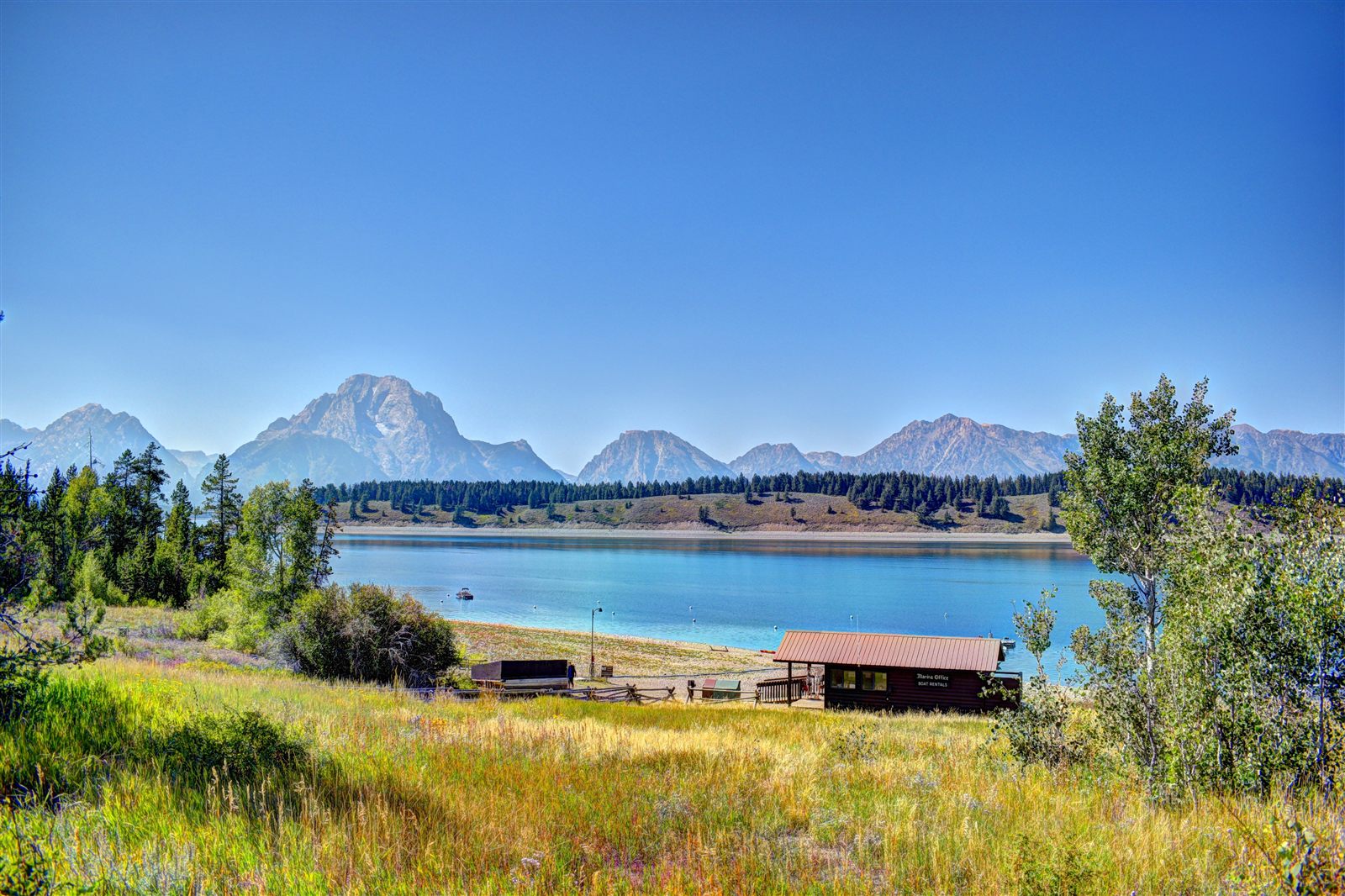
North (Colter Bay / Jackson Lake) — the Yellowstone-pairing base
Colter Bay Village concentrates the park’s RV infrastructure: the full-hookup RV Park, the dry-camping Campground with a complimentary dump station and potable water filling station (operator’s page), plus laundry, showers, marina, and stores per the campground’s Recreation.gov record. This is the base for lake days and for continuing north to Yellowstone.
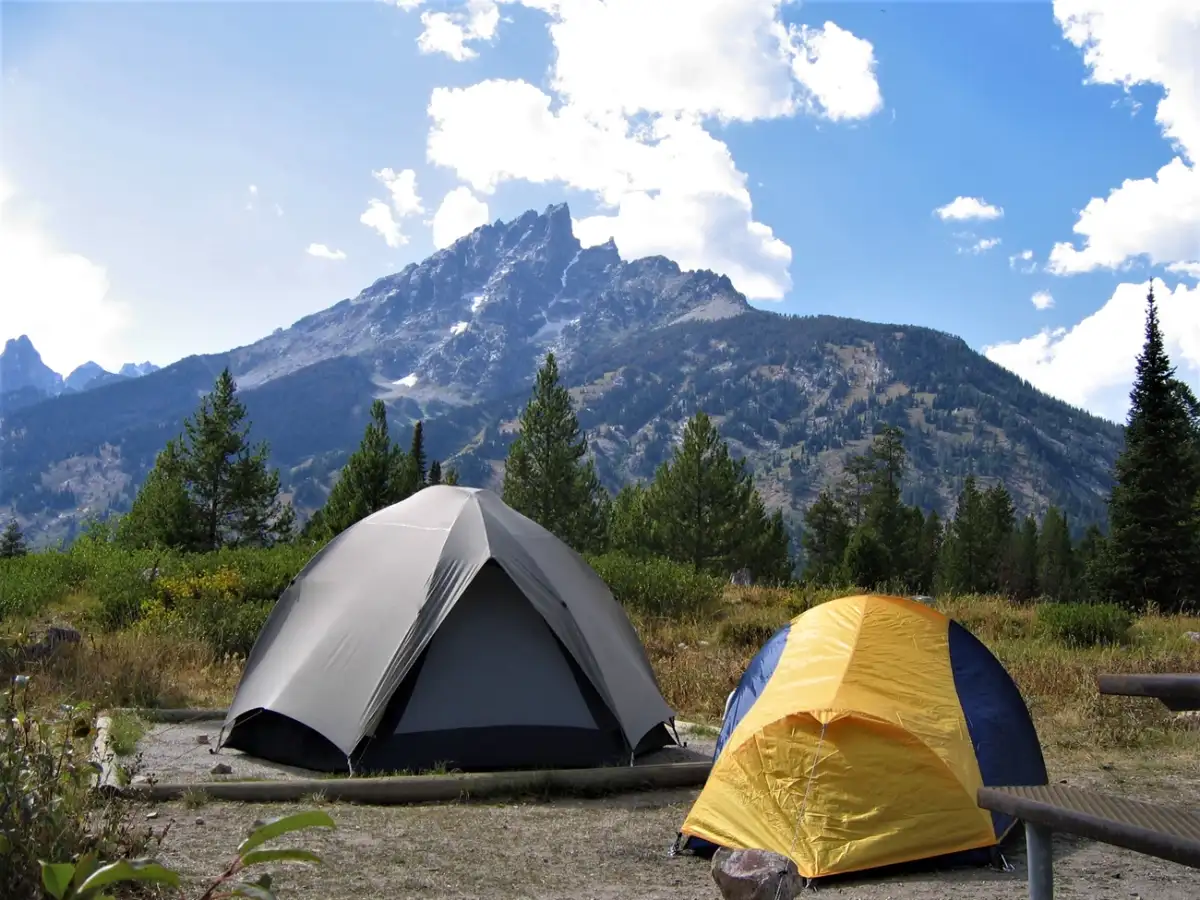
Central (Signal Mountain) — electric-only and dry sites for shorter rigs
Signal Mountain Campground accepts RVs and trailers up to 30 feet, offers both electric-only and non-electric sites, and lists a dump station and potable water. Loops 1 and 2 allow generators from 8 a.m. to 8 p.m.; Loop 3 is generator-free. Individual parking-pad dimensions still control fit.
South (Gros Ventre) — the Jackson-side wildlife base
Gros Ventre Campground sits along the Gros Ventre River with 279 individual sites plus 39 electric-only sites, dry RV camping, one potable-water station and two RV dump points near the entrance, per its Recreation.gov record. NPS and the operator label dump access limited, so confirm operational status. Official records say bison, moose and mule deer are known to frequent the area; sightings are never guaranteed.
North boundary (Headwaters, John D. Rockefeller Jr. Memorial Parkway)
Headwaters Campground at Flagg Ranch is a boundary-area base two miles south of Yellowstone’s South Entrance. Its RV sites are full-hookup pull-throughs with a 45-foot combined RV-plus-tow limit. The current record also flags a multi-year utility project, noise-producing work from 9 a.m. to 6 p.m., and reduced laundry availability; recheck the alert before booking.
Far north (Lizard Creek) — the small-rig Yellowstone-pairing base
Lizard Creek Campground is the developed small-rig option near Yellowstone. Its current Recreation.gov record caps RVs and trailers at 25 feet, requires every vehicle to fit the selected pad, and permits generators only in the first loop (sites 48–63) from 8 a.m. to 8 p.m. An older NPS summary says 30 feet, so use the current 25-foot Recreation.gov limit and verify the chosen site.
Step 2: Campground comparison (verified fields)

Fields below come from the linked official records, checked August 2, 2026. Season dates are stated on the records in approximate form (e.g., “mid-May to late-September”); exact current-year dates live on each record and change — verify when booking.
| Campground | RV service level | Key size rule | Water/waste services | Generator rule (official) | Official record |
|---|---|---|---|---|---|
| Colter Bay RV Park | 112 total full-hookup sites (sewer, water, 20/30/50-amp) | Pull-through: 45 ft combined RV + tow/towed vehicle; back-in: 30 ft; site specs control | Sewer and water at site; showers/laundry nearby for a fee | Generator use prohibited at all times | Recreation.gov 258831 |
| Colter Bay Campground | Dry RV camping + 13 electric-only ADA-accessible sites | Operator states up to 45 ft combined; Recreation.gov says site specs control and tow vehicle counts | Complimentary dump + potable fill; propane at adjacent RV Park | H/J/K/M/O + group sites only; official sources conflict on morning start time, so confirm current hours | Recreation.gov 258830 · gtlc.com |
| Gros Ventre | Dry RV camping + 39 electric-only sites | Operator states a 45-ft combined maximum; site dimensions control | One potable-water station + two dump points near entrance; access labeled limited | A/B/C confirmed; Recreation.gov also lists EC in one notice, so verify EC before relying on it | Recreation.gov 247661 · gtlc.com |
| Signal Mountain | Dry + electric-only sites | RV/trailer up to 30 ft; selected pad must fit the whole setup | Dump station + potable water; showers/laundry nearby for a fee | Loops 1–2: 8 a.m.–8 p.m.; Loop 3 generator-free | Recreation.gov 247663 |
| Headwaters (parkway) | 97 full-hookup pull-through RV sites | One RV + one tow vehicle, 45 ft combined; site specs control | Water, sewer, 20/30/50-amp at site; showers and reduced-availability laundry | No generator rule stated on the current record; follow posted rules | Recreation.gov 258832 |
| Lizard Creek | Dry sites for small RVs/trailers | Current Recreation.gov maximum 25 ft; verify pad dimensions | Potable water; no dump station stated on the record | First loop, sites 48–63: 8 a.m.–8 p.m.; otherwise prohibited | Recreation.gov 247785 |
| Jenny Lake | Tent-oriented; 7-day stay limit (vs 14 elsewhere) per operator | Not an RV base | — | — | gtlc.com overview |
Step 3: Fit, booking, and stay-limit rules that trip people up
- “45 feet” at Colter Bay is a combined figure — one RV plus one tow/towed vehicle in the same measurement at the RV Park’s pull-throughs and the Campground’s RV sites. Individual site specifications still control. Measure hitched; the method is in our guide to reading campground length limits.
- Electric-only is not full hookups. Official records describe the Gros Ventre, Colter Bay Campground and Signal Mountain sites as electric-only; do not assume water or sewer at the pad.
- Book on Recreation.gov only. The operator states campground reservations cannot be made through its website or call center. The park-specific rule is a six-month rolling window; confirm the selected campground’s live booking calendar before relying on a date or release time.
- Stay limits: 14 nights maximum per campground (7 at Jenny Lake) and 30 nights parkwide per year, per the operator’s overview and the Recreation.gov records.
- Occupancy and vehicle counts are enforced fields: Colter Bay’s record caps standard sites at six guests and defines RV sites as one RV setup; read the chosen site’s vehicle and pad fields before booking.
Step 4: Services planning at a glance
On-site dump and potable-water facilities can simplify dry-camping logistics, but suitability depends on your capacities, consumption, and current station availability. Run your numbers through our water, tanks, and dump-station planning guide — this article deliberately doesn’t restate it — and use the generator rules above when selecting a site. A non-generator loop reduces direct generator exposure but does not guarantee quiet.
| Location or service | Published constraint | Planning action |
|---|---|---|
| Moose–Wilson corridor | Closed to RVs and trailers over 280 in (23.3 ft); NPS also cites an 8-ft width limit. | Use only a compliant vehicle and recheck construction or closure notices. |
| Colter Bay pull-through sites | 45-ft combined RV plus tow/towed vehicle; exact site controls. | Measure the full combination, not the RV alone. |
| Signal Mountain | RVs and trailers up to 30 ft; selected pad must fit. | Verify the individual parking pad. |
| Lizard Creek | Current Recreation.gov maximum: 25 ft. | Use the current record rather than the older 30-ft summary. |
Planning summary of official constraints already cited above. Checked August 2026; exact site and current road notices control.
Step 5: Two 2–3 night plans
Plan A — Teton only (south base)
- Base: Gros Ventre. Arrive with your tank plan set; the potable-water and dump points are near the entrance, but dump access is limited and should be confirmed.
- Day 2: Teton Park Road viewpoints and Jenny Lake area early; evening wildlife along the Gros Ventre corridor near camp.
- Day 3 (if staying): Mormon Row/Antelope Flats, then the Moose–Wilson corridor only in a compliant vehicle. NPS says the road is closed to RVs and trailers over 280 inches (23.3 feet) and cites an 8-foot width limit; it is narrow, partly unpaved, and subject to construction delays. Check the current NPS corridor page before departure.
Plan B — Two parks, one trip (north base)
- Base: Colter Bay RV Park (hookups) or Campground (dry with on-site services).
- Day 2: Jackson Lake and Colter Bay lakeshore; Signal Mountain area viewpoints.
- Day 3: When Yellowstone’s South Entrance–West Thumb road is open to regular vehicles, West Thumb can be a day trip from a north-side base; verify the live Yellowstone road status before departure. A day trip avoids a second campground reservation. For a two-base version, our Yellowstone RV guide covers that park’s fit and booking channels.
Failure modes
- Booking the RV Park when you meant the Campground (or vice versa) — same village, separate booking records, rules and service levels.
- Arriving over 45 feet combined and discovering the figure includes the tow vehicle.
- Assuming one booking channel covers both parks — Grand Teton uses Recreation.gov, while Yellowstone’s 2026 campground channel varies by campground.
- Treating an electric-only site as a hookup site for water planning.
- Generator dependence in a prohibited loop, or relying on a disputed generator start time without checking the current record.
Departure-day checklist
- Re-open your Recreation.gov reservation; confirm site, dates, and any posted alerts.
- Check current park road and construction status on the park’s official pages, plus weather at elevation.
- Confirm tank state matches your base’s service level (dry vs hookups).
- Food storage per park bear rules — lockers are listed on the campground records.
- Fuel plan for the Jackson–Colter Bay–Yellowstone corridor via the fuel calculator.
Print this guide
This guide prints cleanly from any browser — no plugin, no download, no sign-up. Navigation, images and site links are hidden automatically in the printed version.
Frequently asked questions
Which Grand Teton campgrounds have full hookups?
Inside the park, Colter Bay RV Park provides full hookups. Headwaters Campground at Flagg Ranch, in the John D. Rockefeller, Jr. Memorial Parkway, also provides full-hookup pull-through RV sites. Official records describe Colter Bay Campground, Gros Ventre and Signal Mountain as electric-only or dry — power at most, with no water or sewer at the pad.
How far ahead can I book a Grand Teton campground?
Developed campgrounds are reservation-only and bookable on Recreation.gov on a six-month rolling basis, subject to each facility’s live rules. The authorized concessioner states that campground reservations cannot be made through its own website or call center, so book on Recreation.gov and confirm the selected campground’s live calendar before relying on a date or a release time.
What is the RV length limit at Grand Teton?
The 45 feet quoted at Colter Bay is a combined figure — one RV plus one tow or towed vehicle in the same measurement — and individual site specifications still control. Signal Mountain accepts rigs up to 30 feet, and Lizard Creek’s current Recreation.gov record caps RVs and trailers at 25 feet. Measure hitched, then match the number to a specific site rather than to the campground maximum.
How long can you stay in Grand Teton campgrounds?
Official records generally cap stays at 14 nights per campground, with seven nights at Jenny Lake, and 30 nights parkwide per year. Occupancy and vehicle counts are enforced reservation fields, not guidelines, so check them on the record you are booking.
Limitations, and how to correct us
This guide reflects official records as they read on August 2, 2026. Season dates, fees, site counts, generator rules, construction alerts and stay limits are volatile and live on the linked records; exact current-year dates and nightly prices were deliberately left to those records rather than restated here. We make no live-availability or wildlife-sighting claims and did not visit any site. Where current official sources conflict — notably Colter Bay Campground generator start time and Gros Ventre East Corridor generator eligibility — this guide discloses the conflict and directs readers to the live reservation record and posted campground rules. Corrections welcome under our editorial policy and corrections policy.
Sources
- Recreation.gov — Colter Bay RV Park
- Recreation.gov — Colter Bay Campground
- Recreation.gov — Signal Mountain Campground
- Recreation.gov — Gros Ventre Campground
- Recreation.gov — Headwaters Campground at Flagg Ranch
- Recreation.gov — Lizard Creek Campground
- Grand Teton Lodge Company — authorized concessioner camping information
- Ticheka — Data sources and methodology